Why A Naturally Minerally Sea Salt Tastes Different
Salt is one of the simplest ingredients in the kitchen, but not all salt tastes the same. At its most basic, salt is sodium chloride. But the way it is made, the place it comes from, the minerals it carries and the shape of its crystals all change the way it tastes on food and on the palate.
That is why a high-quality, naturally made with inherent minerality, sea salt like Opito Bay salt can taste more alive than a standard table salt, a heavily processed “sea salt” like Marlborough sea salt or a rock salt. The difference is not hype. It is texture, timing, minerality and craft.
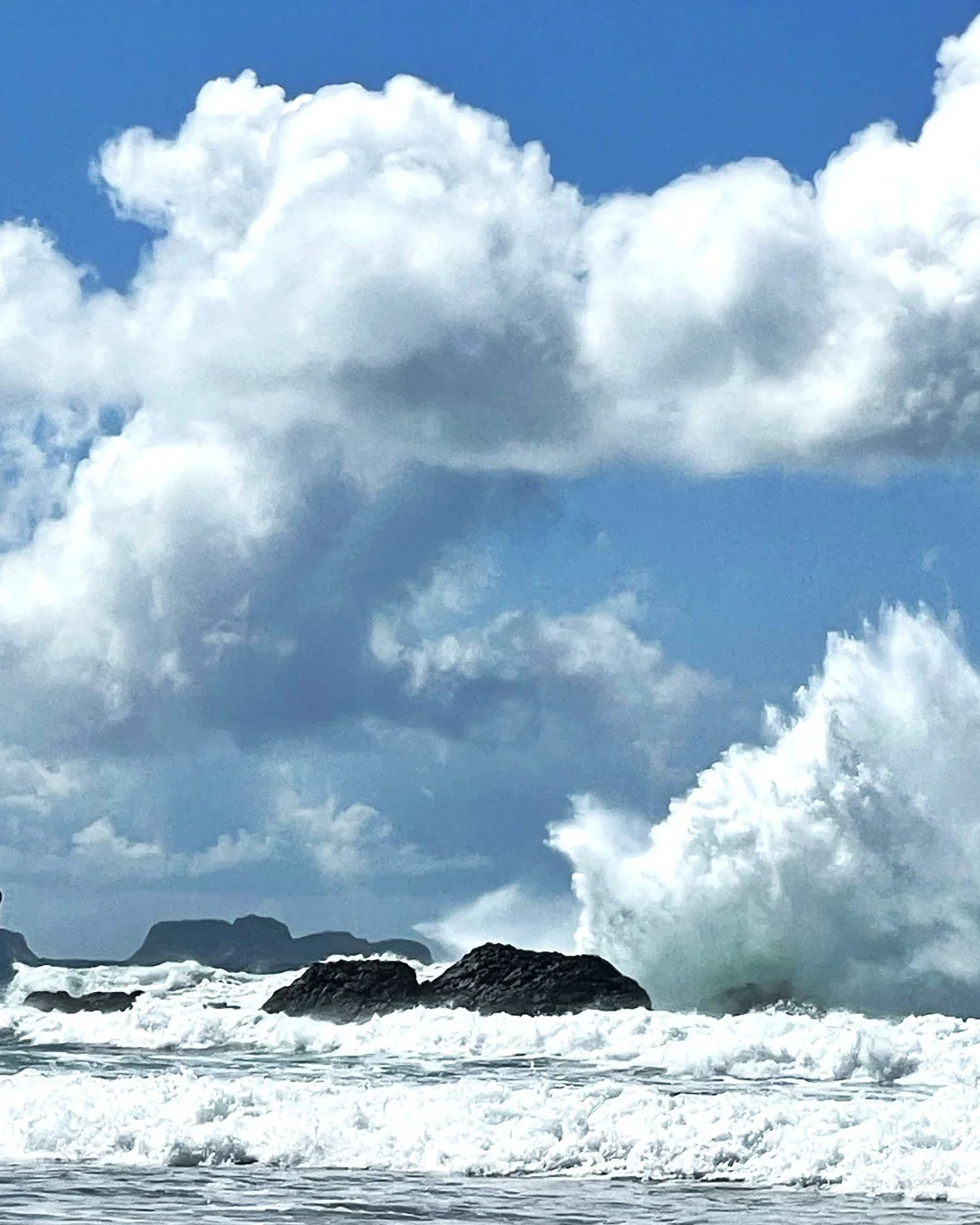
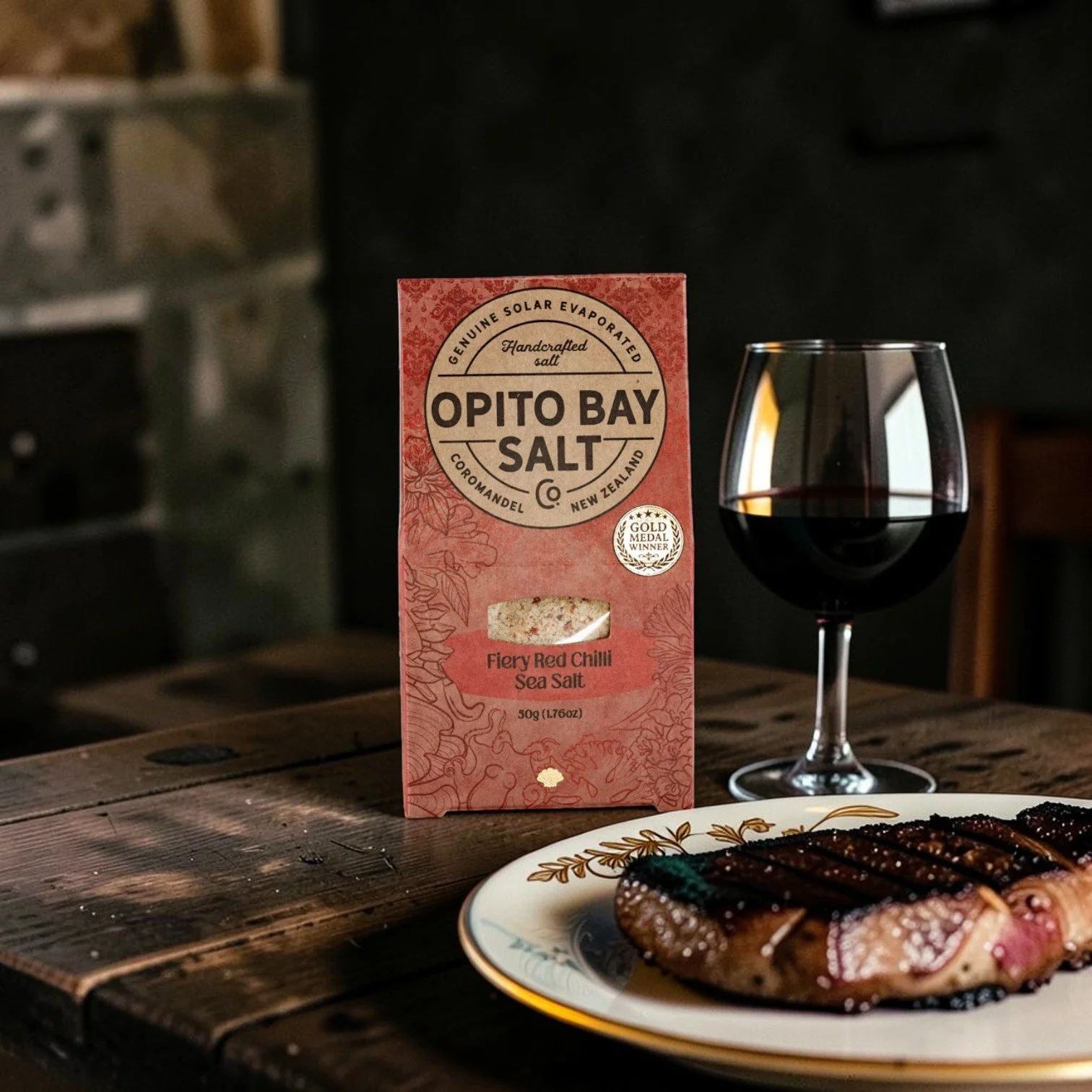
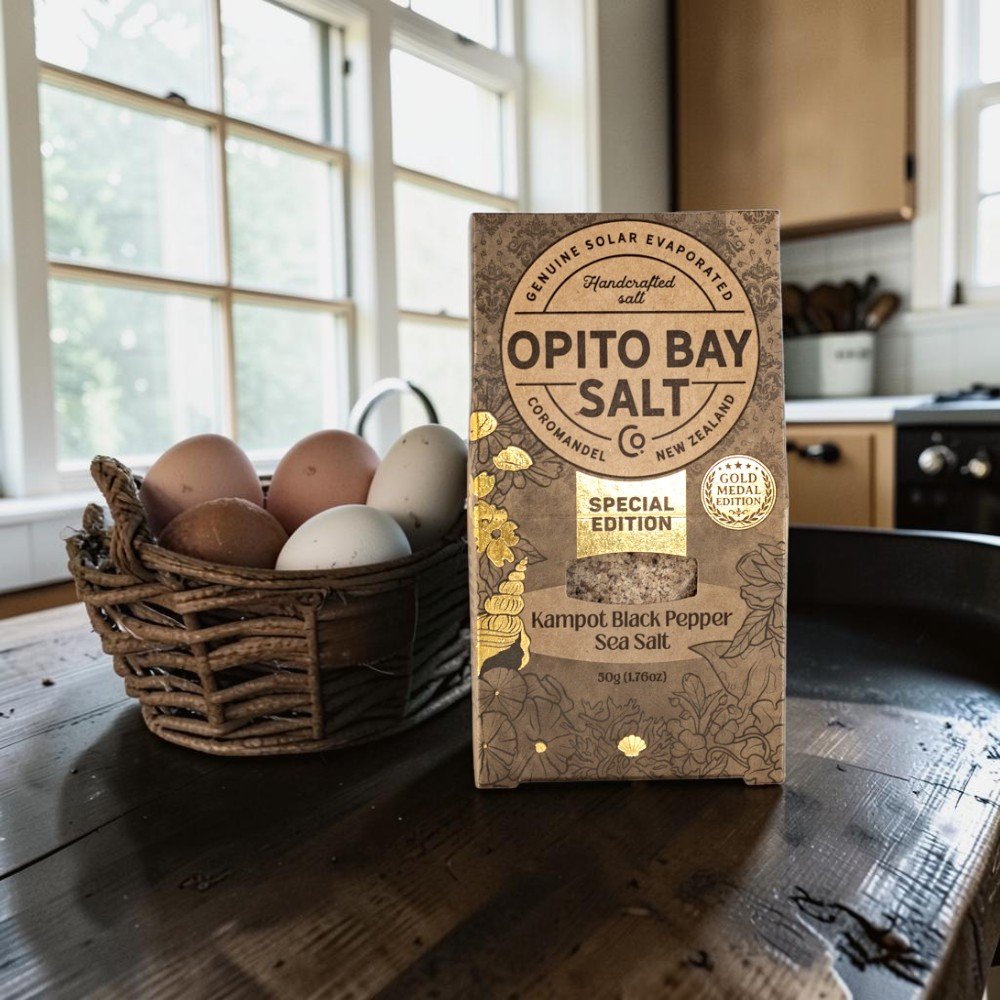
Opito Bay sea salt is hand-harvested on New Zealand’s Coromandel Peninsula and slowly solar-evaporated using sun, wind and time. The result is a natural, unrefined sea salt with variable crystals, a clean briny flavour and a mineral-edged finish that reflects the ocean it comes from.
Sea salt is not just salty
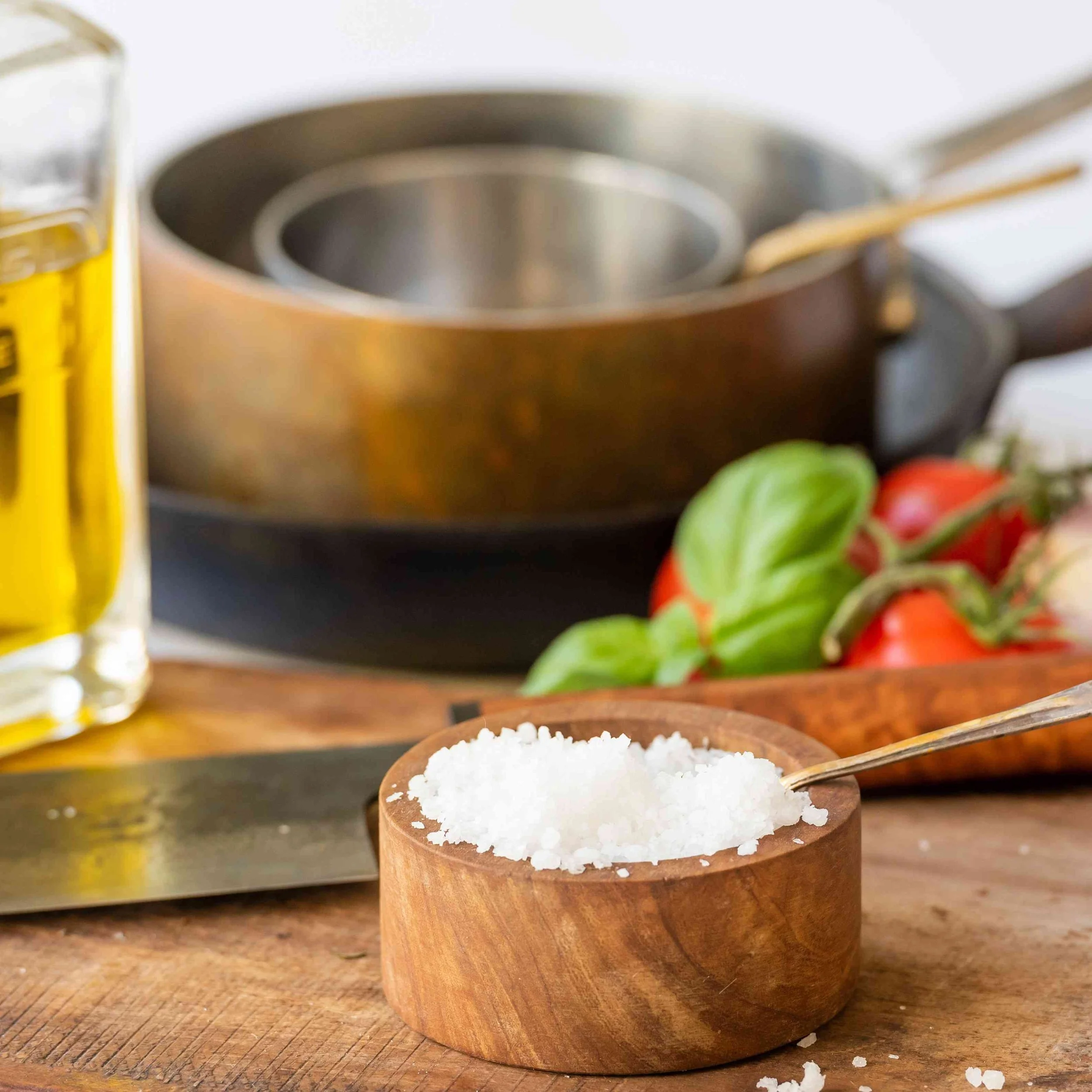
A good sea salt should do more than make food taste “saltier”. It should lift flavour. It should sharpen the flavour of tomatoes, deepen roast vegetables, make butter taste more buttery and give grilled fish or steak a deeper more distinctive flavoured richness.
That difference comes from two things working together: the crystal and the mineral character.
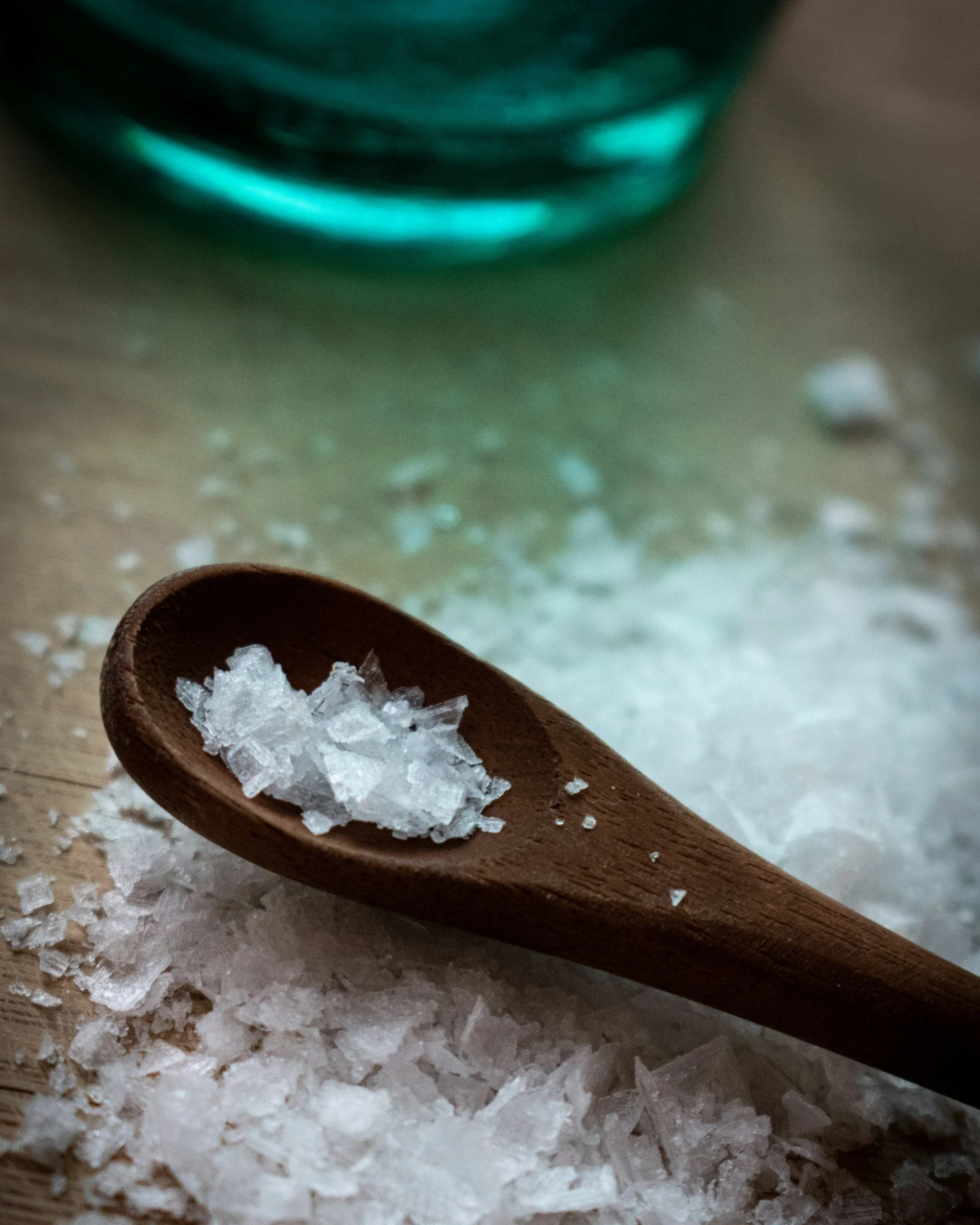
Variable crystal size matters. Natural sea salt crystals are not always perfectly uniform. Some are larger and softly crunchy, some are smaller and dissolve quickly, and some sit somewhere in between. On the palate, this creates a more layered saltiness. Instead of one flat, immediate hit, the salt releases in little moments. A larger crystal can give a soft crunch, then dissolve slowly. A smaller crystal can give a faster burst. Together, they create movement on the palate and add complexity to the saltiness.
Food science supports this idea. Studies on salt crystal size show that particle size affects how quickly sodium is delivered into saliva and how saltiness is perceived. Smaller particles can dissolve faster and create a more immediate perception of saltiness, while larger or differently shaped crystals change the timing and texture of the experience.
This is why natural salt feels and tastes different from fine salt. It is not only what the salt is made of. It is how it touches the tongue.
The taste of the ocean
Mineral-rich sea salt also carries the character of the water it came from. Seawater contains sodium chloride, but it also contains naturally occurring minerals such as magnesium, calcium and potassium in varying amounts. From a flavour point of view, they help create a more complex taste.
A study published in the Journal of Sensory Studies found that sea salts from different parts of the world had different mineral profiles and different time-intensity profiles of salty taste. In plain English, salts from different places can taste and behave differently because their mineral composition and physical structure are not identical.
That is what people often mean when they say a natural sea salt tastes “of the ocean”. It is not fishy. It is not seaweed-like. It is a clean briny character, sometimes with a rounded, mineral edge. In Opito Bay sea salt, that ocean character shows as a bright, savoury lift rather than a hard, metallic saltiness. It has presence, depth and intensity but above all flavour.
Minerality can also shade flavour. Magnesium adds an oceanic bite. Calcium contributes sweetness and structure. Potassium adds a softness. In a well-made natural sea salt, these minerals are present as part of a balanced whole. They should not dominate. They add depth, complexity and a sense of place - so if you have been swimming on the Eastern coast of the North Island of New Zealand you will literally taste the ocean in the sea salt. For the salt farmer the key is knowing when to these minerals peak how they work together during the evaporation process and the art is knowing when to harvest.



Why do so many “salts” taste the same?
This is the question customers often ask once they start comparing salts properly. If something says “sea salt” on the label, surely it should taste like the sea? Unfortunately the only thing Opito Bay sea salt has in common with these “sea salts” like this is there origin.
“Sea salt” describes the source of the salt, not necessarily the care taken in making it. Some sea salts are made slowly in the sun. Some are heated and boiled. Most are washed, dried, refined, milled, screened or blended until they become a very consistent product. Unfortunately these processes strip the salt of its character and minerality. Many are made for industrial scale and free-flowing convenience rather than flavour.
There is nothing automatically wrong with that. Consistency matters for many uses. Bakers, food manufacturers and large kitchens often need salt that behaves the same way every time. A fine, dry, uniform salt is easy to measure, easy to pour and easy to blend.
But when the goal is cheapness of production and consistency of product, flavour is sacrificed.
Commercial industrial salt production includes several methods: solar evaporation, mechanical evaporation and rock salt mining. Mechanical evaporation can use heat or vacuum systems to evaporate brine efficiently, while solar salt relies on sun and wind. Then processing out the minerals and contaminants.
Some famous sea salts are also heat-evaporated. Maldon, for example, says its brine is evaporated in salt pans over flames to form its distinctive crystals. Maldon is a respected finishing salt with its own texture and heritage, but it is a different process from slow, natural solar evaporation. So with boiling the unique minerality and depth of flavour is lost to create a more consistent flaky texture and one off salty burst.
At the more processed end of the market, food-grade salt is often made to meet a high sodium chloride specification. Codex food-grade salt standards require salt to be primarily sodium chloride and allow for iodisation in iodine-deficient areas.
Many New Zealand salts and some fine salts also include permitted anti-caking agents so they remain free-flowing in humid conditions. Ferrocyanides, for example, are permitted anti-caking agents in salt in many countries, including Australia and New Zealand. They are used for function, not flavour.
This is not a safety scare. These additives are regulated and used at permitted levels. The point is culinary. When salt is purified, standardised, milled and made free-flowing, it can lose the natural variation that gives artisan sea salt its character. It becomes clean, predictable and useful, but not especially expressive. Oh and cheap! It’s why many very credible food producers choose to use processed salt rather than one with provenance, flavour and a salt that is truly representative of Aotearoa.

What about rock salt?
Rock salt is salt from ancient deposits. It began as seawater or saline water long ago, then was buried and compressed over geological time. Some rock salts are beautiful. Some have colour from trace minerals or geological impurities. Himalayan [from Pakistan] pink salt is the best-known example.
But rock salt is not automatically more complex in flavour. It is still mostly 99% sodium chloride. Once it is ground into a fine, uniform grain, it behaves much like any other fine salt: fast, direct and even. That uniformity affects the way saltiness is perceived. It can be useful in cooking, but it does not give the same crystal-by-crystal experience as a natural finishing sea salt.
Fine rock salt can also taste sharper simply because it dissolves quickly and distributes evenly. That can make food taste immediately salty rather than gradually seasoned. It is not necessarily “bad”. It is just a different tool.
A premium sea salt like Opito Bay brings you closer to the food you are seasoning. Its more deliberate and conscious ingredient than a commodity seasoning. It brings texture, brightness and a little drama to your food. You notice the moment it touches your taste buds.
Why premium sea salt costs more
A good artisan sea salt costs more because it is slower and harder to make.
Industrial salt can be produced at huge scale. It is mechanically harvested, washed, dried, milled, boiled, refined and packed in large volumes. Natural hand harvested solar-evaporated sea salt is different. It depends on weather, time, space and judgement. It needs capital investment in evaporation areas, careful handling, food safety systems, storage, drying, packing and people.
Hand-harvesting is labour-intensive. The salt maker is not simply extracting salt. They are watching the brine, the crystals, the weather, the season and the point at which the salt is ready. Harvest too early and the crystals may not have developed enough character. Harvest too late and the mineral balance can become too strong or bitter. The skill is in choosing the right moment.
That is especially true for Opito Bay sea salt because it is made with the seasons. It cannot be made in the same way all year. Sun, wind, humidity and temperature all influence evaporation and crystal formation. Each batch carries subtle variation. That is not a flaw. It is part of the beauty of natural salt.
Wine drinkers understand vintage. Coffee lovers understand origin. Cheese lovers understand seasonality. Natural sea salt has its own version of the same idea. A living process produces a more expressive ingredient.
FLAVOUR SHAPED BY THE OCEAN
The easiest way to understand mineral-rich sea salt is to try it simply.
Sprinkle a few crystals of Opito Bay sea salt on a slice of ripe tomato. Taste how the tomato becomes sweeter and more savoury. Try it on soft buttered sourdough. Notice the crunch, then the dissolve. Season grilled fish with a small pinch and see how the salt lifts the flavour and sweetness of the fish. Add a little to roasted vegetables and notice how it sharpens flavour without overwhelming it.
Use less than you think. A good sea salt has presence. It should not blanket food in saltiness. It should enliven flavour.
The real difference
The best sea salt is not about being fancy for the sake of it. It is about respect for ingredients.
Processed salt has its place. Fine table salt is useful in baking, brining, in your pasta or rice water . Rock salt has its uses, especially in grinders or again in cooking applications where flavour is less important. Heat-evaporated flake salts can be excellent finishing salts with beautiful texture yet lack complexity depth - a fair-weather friend.
But a mineral-rich, solar-evaporated, hand-harvested sea salt offers something different. It tastes of place. It carries the ocean in a subtle, savoury way. Its crystals vary, and that variation changes how saltiness arrives on the palate. Its minerality gives shape and complexity. Its scarcity comes from weather, time, labour and judgement.
That is why Opito Bay sea salt tastes different.
It is not just salt. It is ocean, sun, wind and craft — harvested at the right moment, for food that deserves to taste more alive.
References
Sources used include Opito Bay Salt Co. product and FAQ information on solar evaporation, hand-harvesting and mineral character; Morton Salt’s overview of salt production methods; Maldon Salt’s description of flame evaporation; Codex food-grade salt information; research on salt crystal size and saltiness perception; and sensory research on mineral composition and time-intensity profiles of sea salts from researchgate.net, www.seriouseats.com,